
Discover the richness of Fano, the Furlo Gorge State Nature Reserve, and fortified towns such as Mondavio, Montefelcino, Serrungarina, Saltara, and Cartoceto, along with historic towns along the Via Flaminia like Fossombrone and Acqualagna, through tailor-made itineraries blending history, nature, and food and wine. I offer guided tours of historic centers and hiking excursions along inland trails, as well as educational activities designed for groups, schools, and families. A slow-paced journey amidst Roman vestiges, Renaissance fortresses, spectacular gorges, and traditional Marche flavors.
FANO GUIDED TOUR
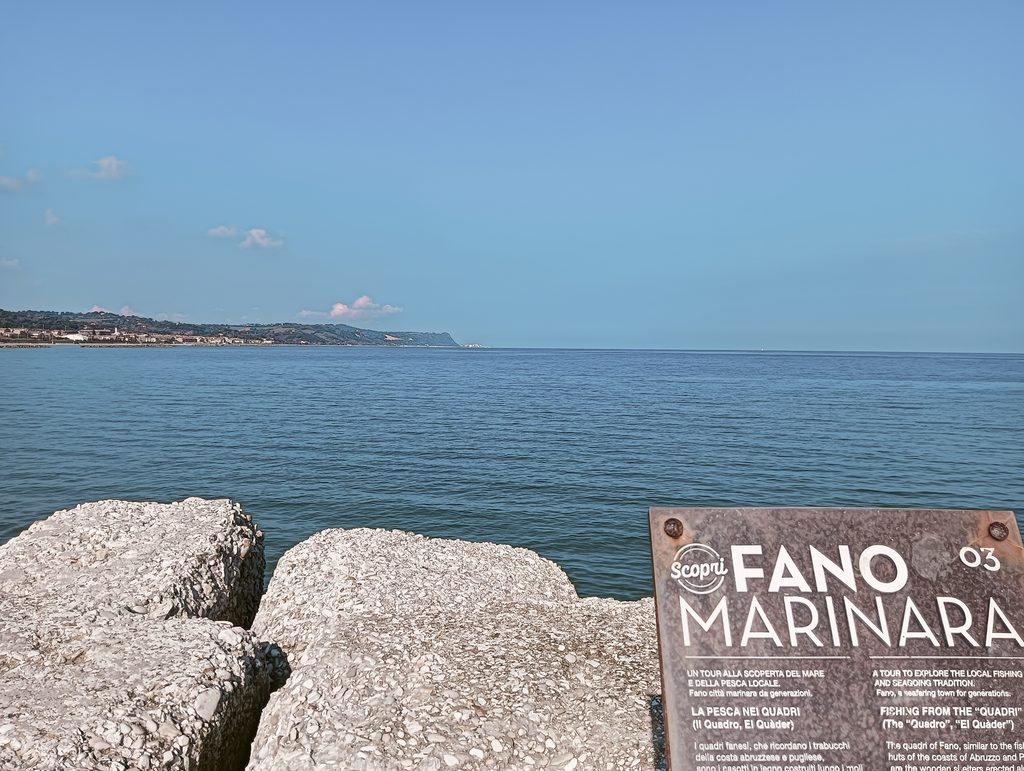
A journey starting from the Roman roots of the Via Flaminia, which passed through the imposing Arch of Augustus to enter ancient Fanum Fortunae—today home to the excavations of the famous Basilica of Vitruvius, the architect whose treatises inspired subsequent generations. We then continue into medieval Fano, the theater of bloody clashes between the Del Cassero and Da Carignano families—recounted by Dante in the Divine Comedy—and the events of the Malatesta family, who transformed the city into a cultured and refined signorial court. Along the way, we will discover its artistic and religious treasures, including the Cathedral of Santa Maria Assunta and the Church of Santa Maria Nuova, which houses masterpieces by Perugino and Giovanni Santi. Fano is also home to one of Italy’s oldest carnivals, the Carnival of Fano; the city’s strong seafaring soul is reflected in its rich and flavorful Brodetto alla fanese (fish stew) and the traditional Moretta fanese coffee drink.
FURLO GORGE NATURE RESERVE
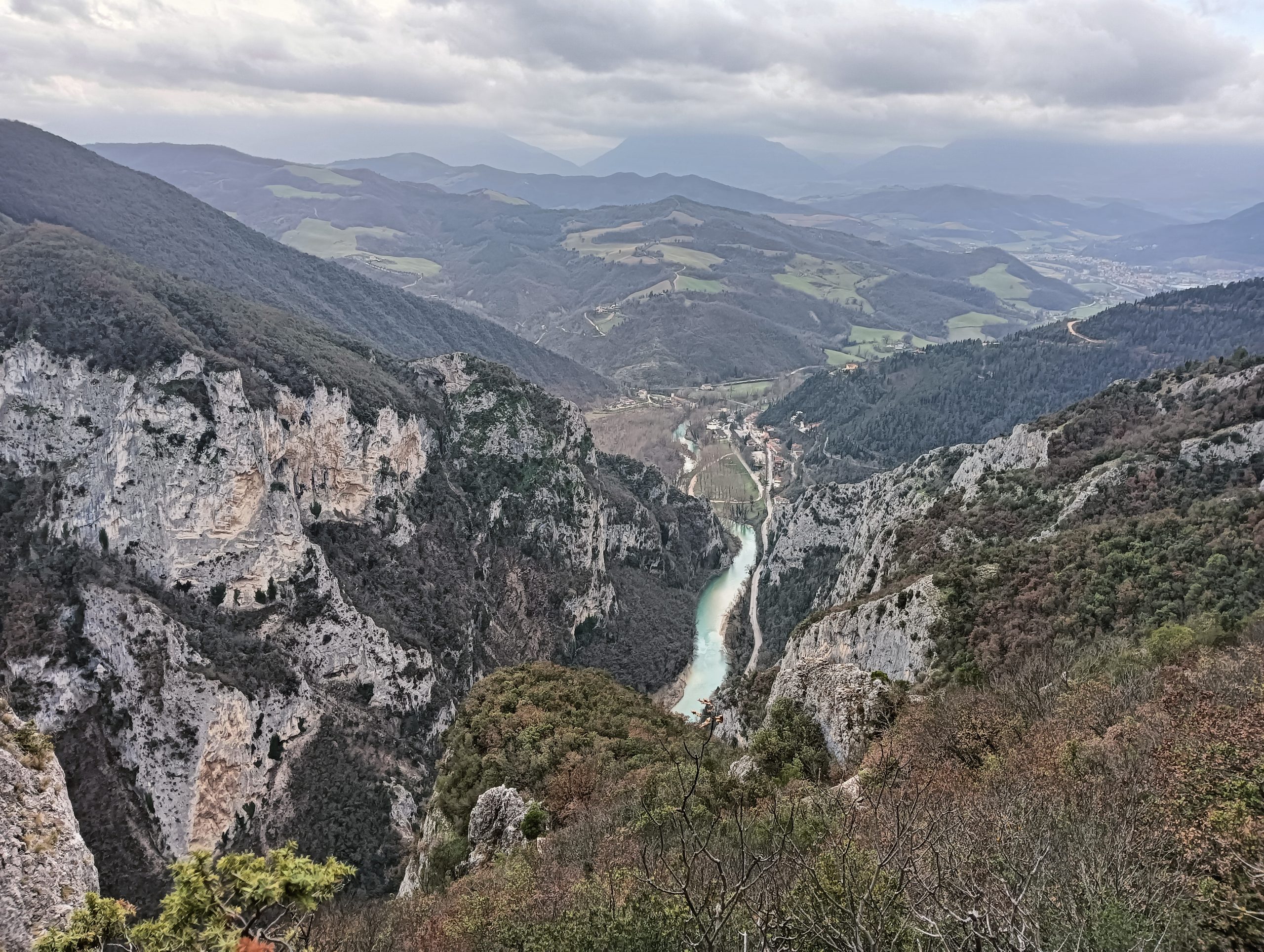
An easy, accessible walk allows you to step into the evocative Furlo Gorge, surrounded by its imposing and sheer rock walls. These cliffs tell a millennium-old story dating back to the Jurassic period, when a warm, shallow sea favored the formation of massive limestone. In this protected habitat, the golden eagle nests—a presence documented since the 1500s—alongside several pairs of peregrine falcons. Furlo is also an extraordinary treasure trove of history: the Via Flaminia crosses its heart through the spectacular Roman tunnel ordered by Emperor Vespasian over 2,000 years ago. A historic place of passage and pilgrimage, witnessed by the nearby Abbey of San Vincenzo, the reserve offers a landscape rich in flora and fauna, all to be discovered also through the experience of the “Lorenzo Mannozzi-Torini” Local Museum.
MONDAVIO AND ITS COUNTRYSIDE
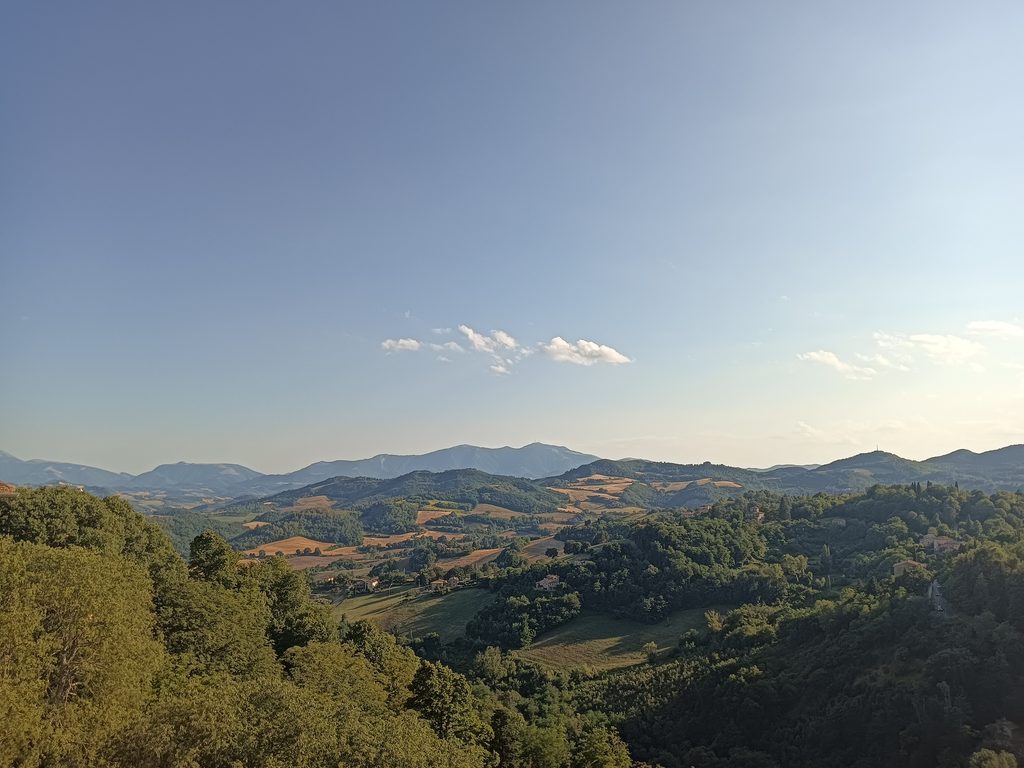
Nestled on a hill between the Metauro and Cesano Valleys, Mondavio is one of the best-preserved historic villages in the Marche region. Its imposing Rocca Roveresca, a masterpiece of Renaissance military architecture designed by the renowned architect Francesco di Giorgio Martini, dominates the surrounding landscape with its majestic keep and evocative moat, which hosts the War Machines Park. Walking through its walls and alleys, you can breathe in the atmosphere of the Renaissance era under the rule of the Della Rovere family. Around the castle, it is possible to organize a pleasant loop excursion along the contrade and ancient dirt tracks, ideal for exploring the wonderful hilly landscape. Walking among field paths and cultivated fields, we will notice how the traces of the rural world have layered over time: amidst cereal crops, ancient farmhouses, country hedgerows, and spontaneous vegetation that shifts its rhythm with the seasons.
FOSSOMBRONE AND THE CESANE MOUNTAINS
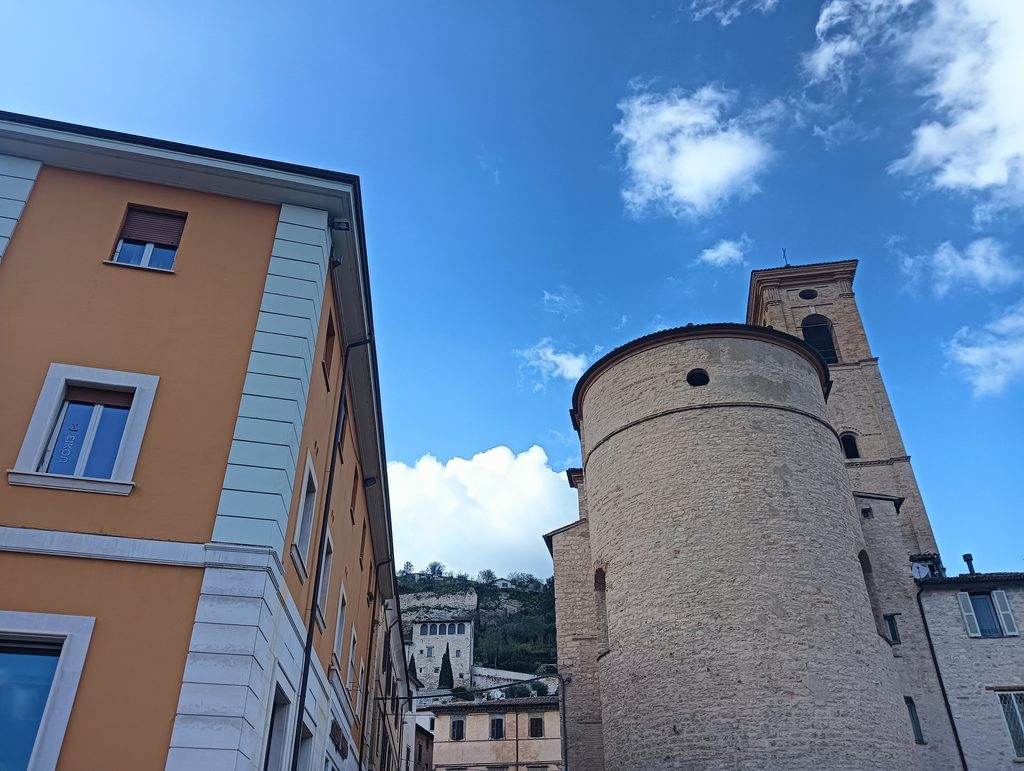
Ancient Forum Sempronii arose along the route of the Via Flaminia, resting on the ancient terraces of the Metauro River. Its deep connection with water is still testified today by its evocative bridges. The Montefeltro family and later the Della Rovere family enriched its urban layout by building the Ducal Palace complex, divided between the High Court (Corte Alta) and Low Court (Corte Bassa), the stage for the intense love story between Guidobaldo I from Montefeltro and Elisabetta Gonzaga. Walking under its characteristic porticoes, we will discover the history of a prosperous town where trade and craftsmanship played a prominent role, as demonstrated by the historic silk mill. The center is rich in splendid churches: the majestic Cathedral of Saint Peter Apostle and Saint Aldebrand, the Church of Saint Augustine, and the Church of Saint Philip Neri, a Baroque masterpiece. The High Court also houses the Archaeological Museum, from which a spectacular staircase leads up to the remains of the ancient medieval fortress, redesigned by the famous architect Francesco di Giorgio Martini.