The San Bartolo Regional Park
For my first article, I chose to tell the story of a special place: a regional park right on my doorstep. As a child, I often went to the beach at Baia Flaminia, and occasionally, from a villa nestled at the foot of Mount San Bartolo, the voice of Luciano Pavarotti would drift out as he sang. I remember gazing up at that great cliff face that seemed to plunge directly into the sea. Back then, it appeared gigantic to me, even though its peak reaches “only” 200 meters above sea level! I loved walking along the beach and continuing along a narrow, quiet, rocky path until the high tide prevented me from going any further.
The San Bartolo Park is a territory rich in history—a landscape shaped and reshaped over the centuries that requires a touch of imagination to be fully understood. The earliest traces date back to ancient Greek seafarers who, over two thousand years ago, navigated the Adriatic and found shelter in the natural coves along these cliffs. They likely built a small landing place here and may have traded with the Celtic populations inhabiting these lands.
Geology, Fossils, and Ever-Changing Landscapes
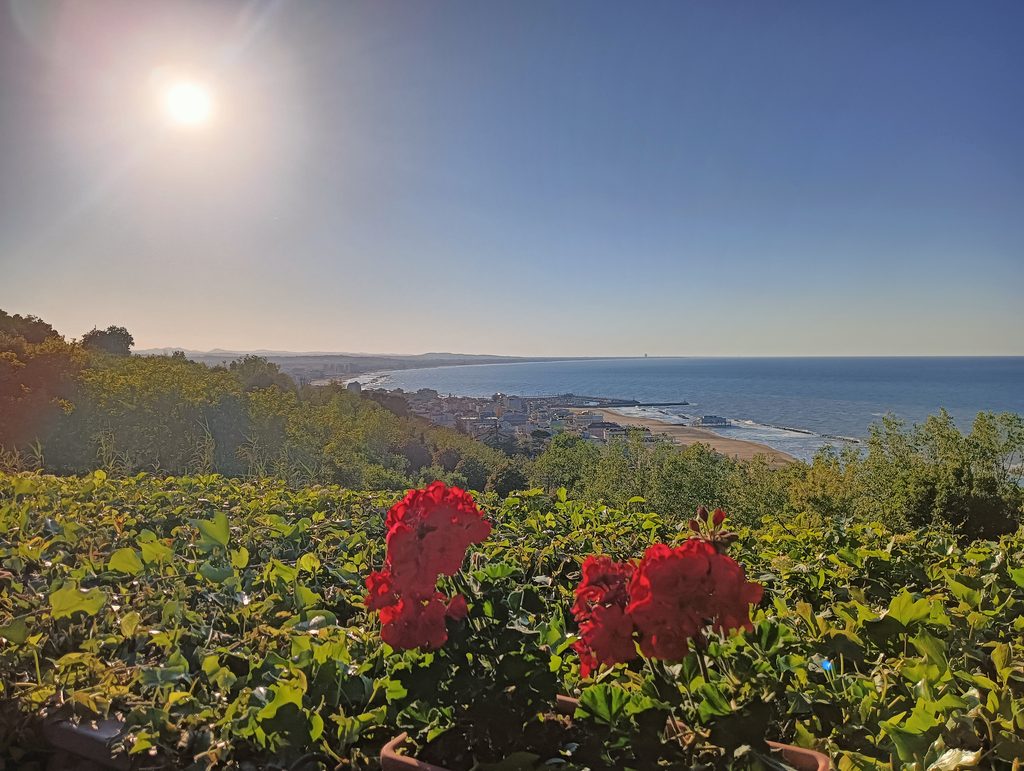
One of my favorite trails starts at the Tetto del Mondo (the “Roof of the World”). From here, a spectacular panorama opens up, stretching all the way from Rimini to Mount Conero. In May, the rolling hills are draped in the vibrant yellow of Spanish broom (Spartium junceum), while in the distance, the fairytale silhouette of Gradara Castle comes into view. I adore this spot in every season, but especially in autumn, when the leaves of the common dogwood (Cornus sanguinea) turn a deep crimson, framing the view toward the Apennines.
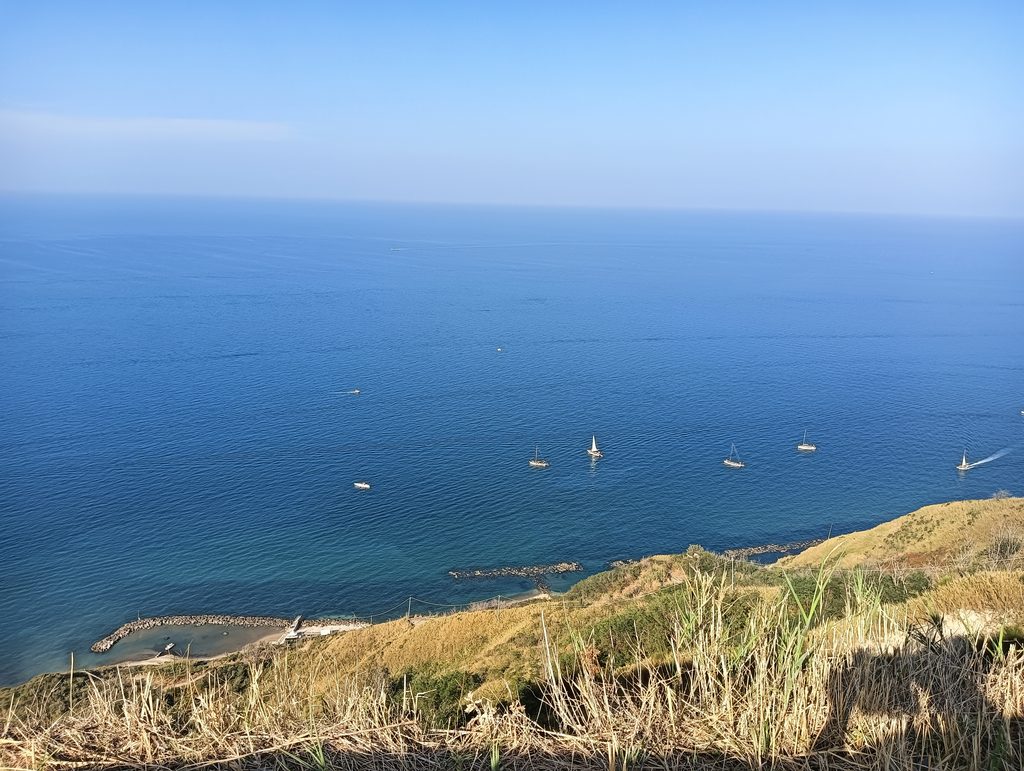
A scenic path runs along the cliff edge, offering breathtaking views over the sea. San Bartolo is also a vital flyway for migratory birds: during spring and late summer, various raptors can be observed, including the Montagu’s harrier (Circus pygargus) and the European honey buzzard (Pernis apivorus). Along the steepest sections of the cliff face, a few pairs of peregrine falcons (Falco peregrinus) also make their nest.
The trail then winds into the woodland before reaching the tiny harbor of Vallugola. Right here in our Adriatic Sea, we have our very own Atlantis—a legendary sunken city known as Valbruna! Local fishermen passed down tales of retrieving ancient amphorae and statue fragments in their nets. According to some, on clear days when the sea is calm and the water crystal clear, one can even catch a glimpse of the submerged foundations of this famous ancient city.
What is certain is that this small natural cove held strategic importance during Roman times. Two thousand years ago, the natural inlet likely extended further into the sea than it does today. Formed by sandstone and marl layers, these coastal cliffs have been continuously sculpted over time by relentless coastal erosion, which constantly reshapes the landscape.
The harbor flourished thanks to its proximity to the Via Flaminia—one of the most crucial Roman consular roads along the Adriatic coast, connecting Rome to Ariminum (Rimini). Agricultural goods from the surrounding countryside, such as wine and grain, were transported and traded through this port. An inscribed stone slab discovered on the Gabicce promontory supports the importance of this landing place: the stone bears a votive inscription dedicated to Jupiter Sereno, protector of mariners and seafarers.
Castles, Historic Villages, and Countryside
Another aspect I love about San Bartolo Park is the sheer variety of landscapes you can cross within a single half-day hike. Leaving the coastline behind, the path continues inland, and Gradara Castle appears in all its medieval grandeur.
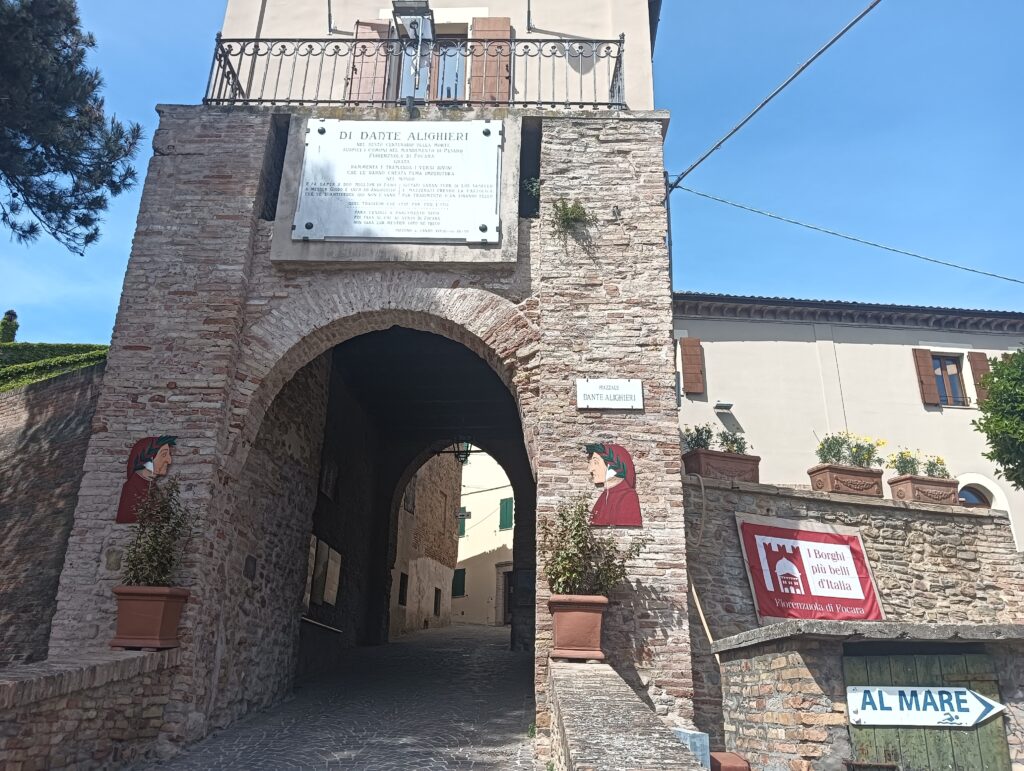
During the Middle Ages, several other castles and fortified hilltop villages could be spotted across these ridges, including Granarola, Gabicce Monte, Casteldimezzo, and Fiorenzuola di Focara.
The earliest documentary records mentioning these fortifications date back to the 11th and 12th centuries, though some settlements likely have much older origins. Following the fall of the Western Roman Empire—a period marked by conflict and political transformation—many settlements were progressively fortified with towers and defensive walls.
This area lay in a contested borderland between the Lombards and the Byzantines based in Ravenna. The Byzantines considered themselves the heirs to Roman tradition and maintained control over key stretches of the coast, while the Lombards ruled vast portions of the inland territories. Casteldimezzo, anciently known as Gagliole, may have served as a Lombard outpost. It is very likely that the San Bartolo hills were the backdrop for intense rivalries and clashes between these two powers.
Today, along this section of the route, the landscape presents a rich mosaic of vineyards, olive groves, majestic oaks, and tall cypress trees accentuating the contours of elegant villas and young woodlands. It is a harmonious environment where natural beauty continually intertwines with human heritage and history.
A short detour leads to the small chapel of Madonna del Mulino (Our Lady of the Mill). An ancient olive press once stood in this peaceful spot. Dedicated to the Virgin Mary, the chapel houses numerous ex-votos—small votive offerings testifying to answered prayers and miracles attributed to her intercession.
The present chapel dates back to 1840, although parish archives document its existence as early as the second half of the 17th century. The stories handed down reflect deep local devotion: legend has it that the Virgin Mary saved a young girl bitten by a viper; another tale tells of a local farmer struck by lightning and trapped under a heavy log, who was rescued after praying to the Madonnina del Mulino when a mysterious passerby appeared out of nowhere to lift the trunk before vanishing forever.
Another story recounts the miraculous recovery of a young woman suffering from typhoid. And then there is the tale of a bride and groom who chose to celebrate their wedding right in front of the tiny chapel, because it was precisely there that they had met for the very first time.
Not far from this area, the Roman and Early Christian past meet at the archaeological remains of a Roman villa dating to the late 3rd century AD, over which the Early Christian basilica of San Cristoforo ad Aquilam was built in subsequent centuries.
This is what makes San Bartolo Regional Park so special: behind every bend in the trail and every frame of the sea lie hidden traces of different eras, folk tales, and the ancient relationship between people and the land. A place I have known since childhood, yet one I continue to explore with curiosity—discovering something new every single time.